Chess Knight Swap Puzzle
Reviews
This puzzle strips away unnecessary elements to focus on a single, elegant challenge. The small grid forces players to think several moves ahead, and the lack of time pressure makes it ideal for relaxed problem-solving. Each attempt to reduce the move count reveals new strategies, keeping the experience fresh. The simple visuals and intuitive controls ensure that anyone can pick it up quickly. It is a perfect choice for those who enjoy mental exercises that are easy to understand but hard to master.
Description
Core Objective
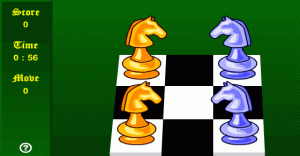
Players face a small grid containing four chess knights split into two color groups. The task is straightforward: relocate each knight so that the two colors swap sides. While the goal is simple to understand, achieving it demands careful sequencing of moves. The knights move in an L-shaped pattern, just as in chess, but the board's limited size means every action affects future possibilities. This setup creates a satisfying challenge for those who enjoy logical thinking.
Movement Mechanics
Knights on this board follow the traditional L-shaped path: two squares in one direction, then one square perpendicular. Because the playing area is small, players must visualize each potential move before committing. Selecting a knight highlights its possible destinations, making it easier to plan ahead. The game records the total number of moves, encouraging players to find the shortest solution. There are no timers, so each decision can be made at a comfortable pace.
Strategic Depth
Success depends on anticipating several moves in advance. A single misplaced knight can block progress, requiring the player to backtrack. Efficient solutions often involve creating open spaces that allow knights to maneuver freely. Over time, players may recognize recurring patterns that lead to faster completions. The puzzle rewards patience and systematic thinking rather than speed, making it accessible to both newcomers and experienced puzzle enthusiasts.
Visual Design and Accessibility
The interface uses a clean, uncluttered layout that focuses attention on the board. Knights are clearly distinguished by color, and the grid remains easy to read on various screen sizes. Controls are simple: click or tap a knight, then select an empty square to move. This straightforward interaction ensures that players of all ages can start playing without a steep learning curve. The design prioritizes clarity, letting the logic challenge take center stage.
Progression and Replay Value
Each session presents the same initial setup, but the path to a solution can vary widely. Players can replay the puzzle multiple times, aiming to reduce their move count with each attempt. The move counter serves as a personal benchmark, motivating incremental improvement. Because the puzzle relies on logic rather than randomness, every playthrough offers a chance to refine one's strategy. This structure makes the game suitable for short breaks or extended problem-solving sessions.