Number Clue Picture Puzzle
Reviews
Number Clue Picture Puzzle offers a clean, focused logic experience. The core mechanic of using colored number clues to fill a grid is intuitive yet challenging. Each solved puzzle reveals a hidden image, providing a nice visual payoff. The lack of timers keeps the activity stress-free, making it ideal for unwinding. The interface is simple and works well on any device. While experienced solvers may want more complexity, the range of puzzle sizes offers steady progression. A solid choice for fans of deductive puzzles.
Description
Core Puzzle Mechanics
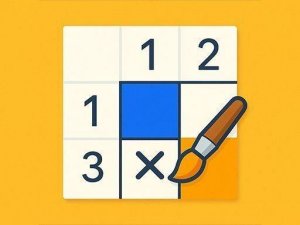
In Number Clue Picture Puzzle, each puzzle begins as an empty grid. Along the top and left edges, you see sequences of colored numbers. Each number tells you how many consecutive squares of that color belong in that row or column. For example, a blue number 3 means three blue squares in a row. Different color groups must be separated by at least one empty square. Using these clues, you deduce which squares to fill and which to leave blank. The challenge is to solve each grid using pure logic, without guessing.
Visual Rewards and Progression
As you correctly fill squares, a colorful picture gradually emerges. This visual feedback makes each completed puzzle satisfying. The game includes puzzles of varying complexity, so newcomers can start with smaller grids while experienced solvers can tackle larger, more intricate designs. The hidden images range from simple shapes to detailed scenes, adding an element of surprise to each solve.
Interface and Accessibility
The game runs entirely in your browser with no installation required. Its interface is designed for ease of use: tap or click to fill a square, and use a separate mark for empty squares. The layout adapts to different screen sizes, making it comfortable on phones, tablets, and computers. There are no timers or pressure, allowing you to work at your own pace.
Building Logical Thinking Skills
Regular play helps sharpen deductive reasoning and pattern recognition. Players learn to identify which clues provide the most information, often starting with rows or columns that have the largest numbers. The need to track empty squares and separate color blocks trains attention to detail. Over time, solvers develop faster strategies for narrowing down possibilities.