Tile Stack Dash
Reviews
Tile Stack Dash succeeds where many hybrid games fail by making both halves of its formula feel essential. The running segments require genuine skill to navigate, while the merging phase demands thoughtful strategy. The visual design is clean and inviting, and the gradual introduction of new obstacles keeps the gameplay loop from growing stale. It is a rare casual game that respects the player's intelligence without becoming overly complex.
Description
Core Concept and Flow
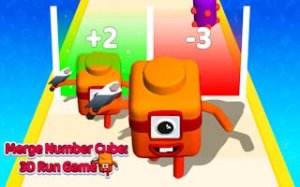
Tile Stack Dash reimagines the endless runner formula by adding a layer of number-based combination. As players guide a single tile through a series of 3D courses, they pick up numbered pieces scattered along the path. The real action happens at the end of each run, where identical numbers can be combined to create a higher value. This simple twist turns a straightforward dash into a puzzle of prioritization—deciding which numbers to collect and which to skip becomes just as important as dodging obstacles.
Obstacle Design and Navigation
The courses are filled with moving barriers that require precise timing to avoid. Swinging pendulums, rotating blocks, and narrow pathways test a player's ability to read the environment quickly. Unlike traditional runners where speed is everything, here a moment of hesitation can mean the difference between a perfect run and a collision. The 3D perspective gives a clear view of upcoming hazards, allowing players to plan their route several steps ahead.
Team Building Through Merging
After each successful run, players enter a merging phase where they combine matching numbered tiles to increase their team's overall strength. This system encourages repeated playthroughs to collect specific numbers needed for upgrades. Special gates along the route add new tiles to the team, expanding the pool of possible combinations. The strategic depth comes from choosing which gates to enter and which numbers to prioritize, as each decision shapes the team's potential for future merges.
Visual Style and Accessibility
The game uses bright, saturated colors and clean geometric shapes that make every tile and obstacle easy to distinguish. The interface is minimal, with on-screen prompts that appear only when needed. Controls are limited to simple left and right swipes, making the game accessible to younger players while still offering enough complexity for adults. The 3D environments change themes periodically, introducing new color palettes and obstacle types to keep the visual experience fresh.
Progression and Rewards
Coins collected during runs can be spent on special tiles that offer unique merging properties or keys that unlock treasure chests containing rare numbers. The game tracks the highest combined tile value achieved, giving players a clear goal to work toward. Each new run offers a slightly different arrangement of obstacles and collectibles, ensuring that no two attempts feel exactly the same. The difficulty curve is gentle, with early levels focusing on basic navigation before introducing more complex obstacle patterns.