Trolls Picture Puzzle
Reviews
Trolls Picture Puzzle keeps its scope small and its tone gentle. The four included scenes, simple shapes, and absence of timers or scores make it easy for young children to play without frustration, and the preview option prevents stuck moments. The trade-off is limited content for older or experienced puzzle players. Families looking for a shared, stress-free activity will get the most from it.
Description
What the Game Asks of Players
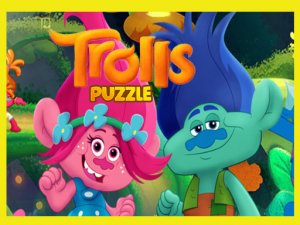
Trolls Picture Puzzle is a jigsaw activity built around a simple goal: return four broken pictures to their original state. Each image features small, friendly trolls who enjoy seeing pictures of themselves, and the game frames the player's job as helping them. There is no story to follow and no character to control. The entire experience rests on one action—dragging a piece and releasing it where it belongs. [IMG_0]
How the Pieces Fit Together
After choosing one of the four pictures, the player sees its pieces scattered across the screen. Matching shapes and colors is the main way to judge where a piece goes, so observation matters more than speed. A preview option shows the completed image when a piece is hard to place. The game does not use a timer, score, or penalty system, which means a wrong drop costs nothing and the player can rearrange pieces as often as needed. Finishing one puzzle makes the next one available. [IMG_1]
Controls and Device Support
The controls work with either a mouse or a finger on touch devices. Click, drag, and release is the full input vocabulary, which keeps the game accessible to young children who may not yet read or handle complex menus. The interface avoids extra buttons during play, so attention stays on the puzzle itself. [IMG_2]
Who Will Get the Most From It
The combination of simple shapes, colorful troll artwork, and a stress-free structure points to an audience of young children and families playing together. Adults looking for a demanding jigsaw challenge will likely find the four scenes limited, but the game is not trying to serve that audience. Its value lies in patience, observation, and hand-eye coordination, delivered without pressure.




Editorial Notes